**New Phytologist Henan University Reveals the Mystery of wheat BB Origin**
New Phytologist | Henan University Reveals the Mystery of wheat BB Origin
2026-10-16 15:54:03
Common wheat (Triticum aestivum L., 2n = 6x = 42, AABBDD) possesses three subgenomes, A, B, and D, and its formation did not occur in a single step. Approximately 700,000–900,000 years ago, an A-genome ancestor (Triticum urartu) and a B-lineage ancestor underwent allopolyploidization to form tetraploid AABB wheat; approximately 8,500–9,000 years ago, tetraploid wheat then hybridized with Aegilops tauschii (DD), ultimately giving rise to today’s hexaploid common wheat. The closely related donors of the A and D subgenomes have become relatively clear, but the origin of the BB subgenome has long remained elusive. Tracing the origin of this genome has also been an important subject in wheat evolutionary research for nearly a century.
01 A Century-Old Question: Where Did the BB Genome Come From?
In early studies, based on chromosome pairing in hybrid progeny, researchers considered several closely related species then classified under Agropyron as candidates; as cytogenetic research advanced, the focus gradually shifted to the Sitopsis group of the genus Aegilops. Since the mid-20th century, researchers have further combined spike morphology, karyotypes, chromosome banding patterns, molecular markers, and sequence data to compare candidate species including Aegilops speltoides, Ae. bicornis, Ae. longissima, Ae. sharonensis, and Ae. searsii. Among these, Aegilops speltoides (SS) gradually became the most prominent extant candidate lineage because it showed a close relationship with BB in chromosome pairing and multiple types of molecular evidence.
However, as research progressed, scientists found that the phylogenetic relationships revealed by different research methods and different chromosomal regions were not entirely consistent, and some genetic features of BB could not be fully explained by extant SS alone. Therefore, researchers began to consider the possibility that more than one ancestral lineage may have contributed to the evolutionary history of BB. With the advent of the whole-genome era, further research found that the ancestral BB donor lineage and the lineage of extant SS diverged approximately 4.49 million years ago, much earlier than the formation of tetraploid AABB wheat approximately 700,000–900,000 years ago. This indicates that although SS and BB are closely related, extant SS may not be the direct donor of BB; the actual diploid donor may have belonged to a closely related lineage that is now extinct or has yet to be discovered. Whether the formation of BB also involved genetic contributions from other ancestral lineages, and how these genetic components entered the ancestral BB genome, remain key questions to be answered.
02 Marker genes in BB genome
In our previous work, we sequenced, assembled and analyzed Triticum-Aegilops mitochondrial DNAs (Hu et al, 2003), Four highly variable mitochondrial genes (atp6, cob, nad6, and nad9) were stablished as marker genes for Triticum and Aegilops species identification. The diploid BB provided mtDNAs for the polyploid wheat, Triticum turgidum (AABB) and Triticum aestivum (AABBDD). And this special atp6 contains a conserved 3’end (ATP synthase A domain) and a unique 5’end (1-377bp) (Fig 1). It has two identical copies in wheats’ mtDNA, and multiple copies in BB subgenome, including 5 intact genes with full open reading frames (ORF) and 10 pseudogenes. In additation, this atp6 was not found in either AA donor Triticum urartu (AA) or DD donor Aegilops tauschii (DD). Therefore, this atp6 is a ideal marker gene to trace BB’s origin.
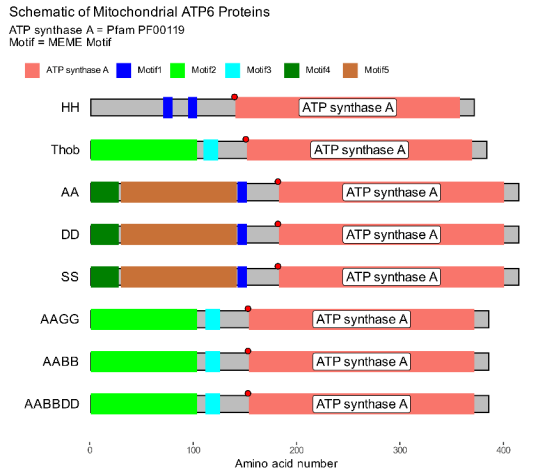
Fig. 1 – Domain and motif analysis of the mitochondrial ATP6 proteins. The motifs or conserved domains were highlighted by different colors. The red circles marked the border of conserved C-terminal sequences, while the N-terminals were rather varied in ATP6. which were predicted to be outside the membrane for a membrane-bound protein. HH: Hordeum vulgare; Thob: Thinopyrum obtusiflorum; AA: Triticum urartu; DD Aegilops tauschii; SS: Ae. speltoides; AAGG: T. aestivum; AABB: T. turgidum; AABBDD: T. aestivum. (Source: Fig S14 in DOI: 10.1016/j.cj.2023.09.011)
03 New Research Progress: Henan University Finds New Evidence for St Participation in BB Formation
Recently, the research group led by Fu-Hao Lu at the State Key Laboratory of Crop Stress Adaptation and Improvement, Henan University, published an article entitled “A St-derived genome contributes to formation of the wheat BB genome” online in New Phytologist. Starting from BB-specific atp6 homologous sequences, the study combined multiple layers of evidence, including genome-wide SNPs, phylogenetic analyses, and specific genes, to identify contributions from St-related lineages to BB formation and proposed a two-step hybridization model.
04 From BB to St: Ancestral Genetic Clues Revealed by atp6
The first clue came from the distinctive distribution of atp6 homologous sequences among different nuclear genomes. We continued to explore BB’s origin using this special atp6 gene across species positioned along the phylogenetic tree, in reverse chronological order. More notably, among the other species compared, multiple copies of atp6 were mainly found in polyploid species carrying the St genome (Fig. 2), for instance: Elymus sibiricus (StStHH), Elymus nutans (StStJrJrJvJv) and Thinopyrum intermedium (StStYYHH).
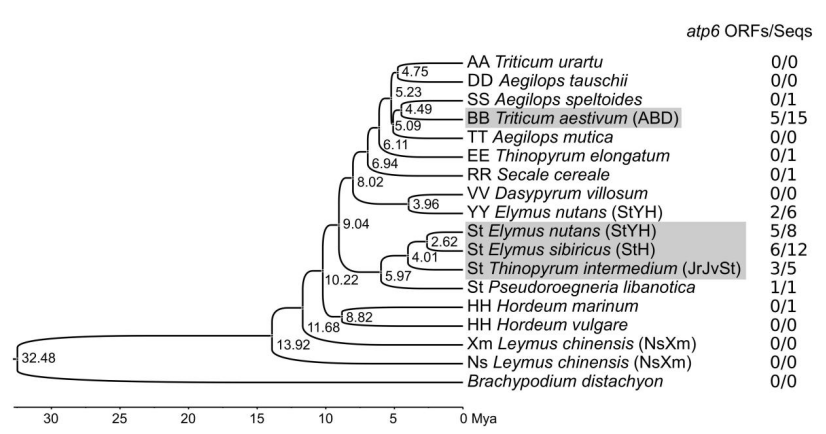
Fig. 2 Summary of Homologs of BB-Specific atp6 Genes
05 From a Single Gene to the Whole Genome: SNPs Reveal St-Derived Signals
A single gene provided a direction, but genome-wide evidence was needed to determine whether St-related signals were widespread. Among the 924,993 high-confidence SNPs analyzed, 813,948 (87.99%) matched the SS genome. After we filtered out these loci, we found that most of the remaining loci could be explained by St, indicating that, apart from SS, St is most closely related to BB. Further examination of 332,991 SNPs that differed between SS and St revealed that the BB genotypes at 250,169 loci matched conserved SS sites, whereas 82,822 loci matched conserved St sites, showing an approximate SS:St allele-matching ratio of 3:1 (Fig. 3). Similar signals were distributed across all BB chromosomes, suggesting that St-related genetic components are not restricted to individual chromosomal regions.
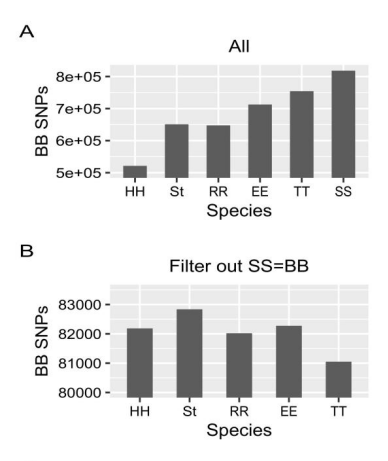
Fig. 3 Distribution and Flow of BB Genome Alleles Among Related Species
06 From Genetic Evidence to an Evolutionary Model: A Two-Step Hybridization Hypothesis
These SNP signals spanning multiple chromosomes provided a basis for tracing the ancestral composition of BB, but what evolutionary process did BB actually undergo? An ultrametric phylogenetic tree constructed from single-copy orthologous genes showed that Aegilops speltoides (SS) and St-related lineages diverged approximately 4 million years ago. Integrating genetic variation and lineage relationships, the study proposed a two-step hybridization model: first, an St ancestor hybridized with the common ancestor of SS and TT; subsequently, the resulting hybrid offspring backcrossed with an SS-related ancestor, ultimately giving rise to the diploid BB ancestor. Chloroplast DNA variation further supported the possibility that an SS-related ancestor provided the maternal parent in the second hybridization (Fig. 4).
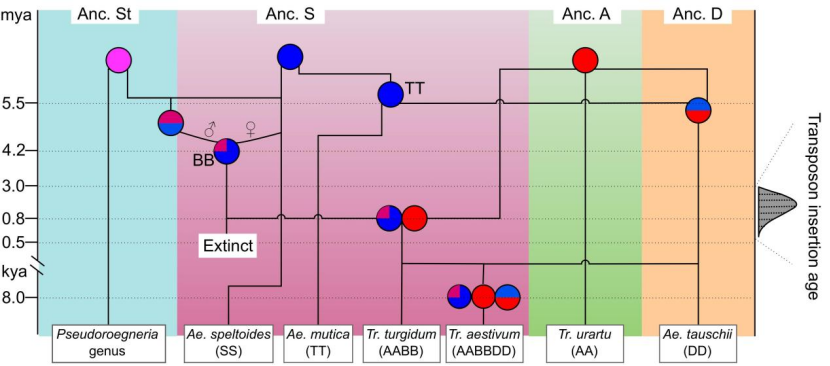
Fig. 4 Proposed Evolutionary Model of BB Genome Origin and Hexaploid Wheat Formation
07 Distinctive Sequence Evidence: 52 Shared Genes Retain Genetic Traces of St
In addition to atp6 and SNPs, the study identified 52 BB-specific genes shared by BB and St but absent from SS. Most of these genes were lost at different stages during the evolution from the St ancestor toward the SS lineage, yet were retained in the BB genome in complete and functional forms. This distinctive gene distribution pattern is difficult to explain solely through simple linear divergence between the BB and SS lineages; instead, it further supports the possibility that the BB ancestor received genetic contributions from an St-related ancestor during its formation.
08 From a Single Donor to the Involvement of Multiple Lineages: New Insights into BB Genome Origin
For a long time, identifying the ancestral donor of the BB genome has been an important topic in wheat evolutionary research. Although SS-related lineages have been considered the leading candidate source of the BB genome, genetic differences between BB and extant SS indicate that its origin may have been more complex than direct inheritance from a single ancestral lineage. This study further reveals that, in addition to SS-related ancestors, St-related ancestors also made important genetic contributions to the formation of the BB genome, providing new evidence for understanding the origin of BB.
This finding does not negate the important position of SS-related ancestors, nor does it establish St as a new sole donor of the BB genome. Rather, it incorporates St into the evolutionary framework of BB origin and proposes a two-step formation model involving ancient hybridization and subsequent backcrossing. This expands research on BB origin from the search for a single ancestral donor to exploration of the evolutionary processes through which different ancestral lineages jointly participated in genome formation through hybridization, and also provides a new perspective for reexamining the complex origin of the B subgenome of common wheat.
Authors
 |
Meng-Di Wang First author State Key Laboratory of Crop Stress Adaptation and Improvement, School of Life Sciences, Henan University, 475004, Kaifeng, Henan, China |
 |
Frédéric Choulet GDEC, INRA, UCA (Universite Clermont Auvergne), 63000, Clermont-Ferrand, France |
 |
Fan Zhang Henan Key Laboratory of Big Data Analysis and Processing, School of Computer and Information Engineering, Henan University, 475004, Kaifeng, Henan, China |
 |
Fu-Hao Lu Corresponding author State Key Laboratory of Crop Stress Adaptation and Improvement, School of Life Sciences, Henan University, 475004, Kaifeng, Henan, China |
Acknowledgements
This study was supported by the Program for Introducing Talents of Discipline to Universities (D16014).
References
-
Hui-Lin Hu, Fan Zhang, Pei Wang, Fu-Hao Lu. Evolutionary genetics of wheat mitochondrial genomes. Crop Journal, 2023, 11(6): 1774-1781. DOI: 10.1016/j.cj.2023.09.011
-
Meng-Di Wang, Frédéric Choulet, Fan Zhang Fu-Hao Lu. A St-derived genome contributes to formation of the wheat BB genome.New Phytologist, [Online, 15 Oct 2026] DOI: 10.1111/nph.71664